
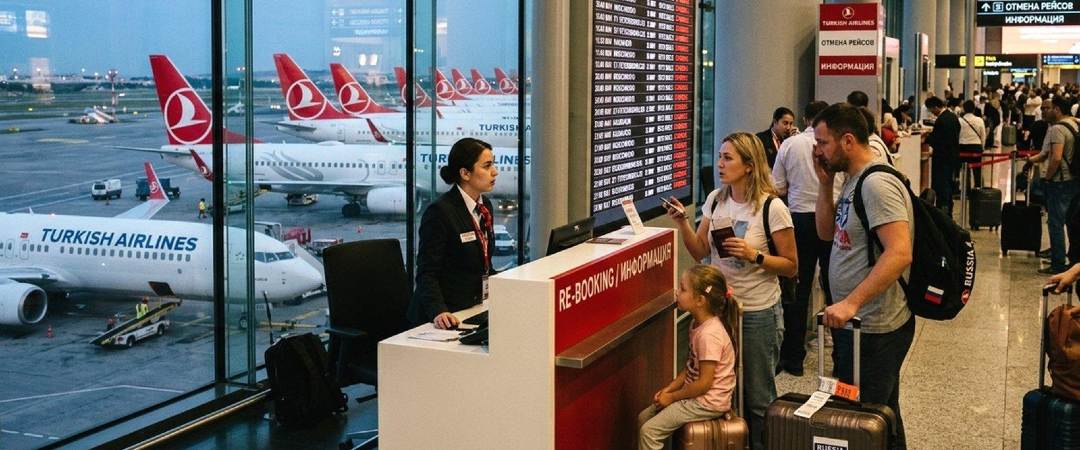
A storm closes a hub, a system outage grounds a fleet, or a single aircraft issue ripples across a network. Within minutes, thousands of travelers reach for their phones. Then they call, chat, message on social media and refresh the app, all at the same time and all with the same question: what happens to my trip?
How a travel brand handles those first hours shapes how travelers remember it for years. Good flight disruption customer service gets people rebooked or refunded quickly, explains their rights clearly and keeps queues from collapsing. In contrast, poor handling turns a bad day into lost loyalty, complaints and, increasingly, regulatory risk.
This guide explains what a disruption does to contact center demand and sets out the U.S. rules agents need to know in 2026. It then covers how to word refund and rebooking offers, a playbook for the first hours, staffing for unplanned surges, the metrics that matter and where an outsourced partner fits. It is general information rather than legal advice, so confirm how each rule applies to your business with counsel.
What Flight Disruption Customer Service Involves
Flight disruption customer service is the work of helping travelers when airlines cancel, significantly delay or change their flights. In practice, it covers notifying affected travelers, rebooking them, processing refunds and credits, arranging any promised meals or hotels, and handling the complaints and claims that follow. In the airline industry, people often call these events irregular operations, or IROPS.
For the contact center, a disruption is different from an ordinary busy day in several ways:
- Demand arrives all at once: In fact, volume can multiply within an hour, with no time to adjust schedules.
- Every channel spikes together: For example, phone, chat, email, app messaging and social media all fill up at the same moment.
- Contacts are urgent and emotional: Travelers may be stranded, missing a connection or worried about an event they cannot miss.
- Calls run longer: For instance, rebooking across limited inventory, explaining options and processing refunds takes more time than a routine call.
- Repeat contacts multiply: In addition, travelers who cannot get through try again on every channel, and many who do get through contact you again later about refunds, bags or hotel receipts.
- The work continues for weeks: Refund processing, expense claims, complaints and chargebacks follow long after the planes are flying again.
Unlike a planned peak, such as a major sporting event, you cannot schedule your way out of a disruption. You need a plan ready before the day you need it. Our guide to travel support for major events covers the planned side of peak demand.
The U.S. Rules Agents Need to Know in 2026
U.S. airline consumer rules have changed several times since 2024, and DOT is still phasing in some changes. Of course, agents do not need to be lawyers. However, they do need to explain refund rights accurately. For quick reference, the tables below summarize the main rules and their status as of November 2026.
Core Refund Rules at a Glance
| Rule | What it requires | What it means for agents |
|---|---|---|
| Automatic refunds for cancellations | Airlines owe passengers a refund when they cancel a flight, for any reason, or significantly change it, and the passenger does not accept alternative transportation or another offer in place of a refund, such as a travel credit, voucher, or miles. Refunds must be automatic | Offer the refund clearly alongside rebooking options |
| Significant changes | Departure or arrival 3+ hours off schedule domestically or 6+ hours internationally, a different airport, more connections, a downgrade, or less accessible travel | Check whether a change qualifies before discussing options |
| Refund timing and form | Within 7 business days for credit card purchases and 20 calendar days for other payment methods, counted from when the refund becomes due, in cash or the original form of payment | Give accurate timelines, explain that bank posting times vary, and make sure the back office meets the deadline |
| Vouchers and credits | Only if the passenger affirmatively chooses them; must be valid for at least five years | Never present a voucher as the only option |
| Bags and extra services | Bag fee refund if the airline does not deliver a bag reported as mishandled within 12 hours on a domestic flight, or on an international flight within 15 hours (flights of 12 hours or less) or 30 hours (longer flights), counted from when the passenger can deplane at the final destination. Refund for paid services not provided. See DOT refund guidance | Handle seat, Wi-Fi and bag fee refunds in the same contact where possible |
Rule Changes and Airline Commitments
Alongside the core refund rules, three newer points affect what agents can promise during a disruption.
| Rule | What it requires | What it means for agents |
|---|---|---|
| Renumbered flights | DOT is not enforcing cancelled-flight refund rules for flights that are only renumbered, until July 7, 2027 | Follow your company’s documented policy for renumbered flights |
| Delay and cancellation causes | Ten specified events move out of the “Air Carrier” cause category, effective February 1, 2027, for flights from January 1, 2027 | Follow the airline’s own customer service plan, not the reporting category, when deciding on meals or hotels |
| Customer service plan commitments | Airlines must honor the rebooking, meal and hotel promises in their own plans | Know exactly what your plan promises for controllable disruptions |
How the Airline Refund Rule Works
The DOT’s automatic refund rule, issued in April 2024, created universal standards for refunds on flights to, from, and within the United States. In addition, refunds must be automatic, without the passenger having to ask, and airlines must promptly tell affected passengers about their right to a refund of the ticket and any extra service fees. Moreover, the refund requirements apply to airlines and ticket agents, so online travel agencies need the same discipline.
Recent Changes and Pauses
Several updates since 2025 affect how teams handle disruptions:
- Renumbered flights: in July 2026, DOT extended its pause on enforcing cancelled-flight refund requirements for flights that are merely renumbered, to July 7, 2027, while it works on a new definition of a cancellation.
- Cause categories: a September 2026 final rule moves ten specified events out of the “Air Carrier” category used to report delays and cancellations within an airline’s control. DOT later delayed its effective date to February 1, 2027, applying to flights on or after January 1, 2027. These are reporting categories. Therefore, brands should not treat them as a substitute for an airline’s own customer service plan or its definition of a controllable disruption, so agents should follow the airline’s documented policy when deciding whether meals, hotels or other assistance are available.
Maintenance Delays and Cash Compensation
Two further updates change what airlines must provide beyond refunds.
- Maintenance directives: since December 2025, DOT has said it will not take action against airlines that do not provide promised amenities for disruptions caused by unscheduled maintenance in response to an airworthiness directive that cannot be deferred. This enforcement discretion covers only those maintenance-related circumstances and the services, amenities and compensation in airlines’ plans. In other words, it does not suspend passenger refund rights. Therefore, airlines should continue to follow their published customer service plans and take legal advice on which commitments apply.
- Cash compensation: DOT withdrew its proposal to require cash compensation, meals and lodging for significant disruptions in November 2025. Refund rights remain in place.
Refund Rights Stay the Same
Airlines’ own promises matter too. The ten airlines on DOT’s dashboard, with their regional partners, carry about 96% of domestic scheduled passenger traffic, and DOT says airlines must honor the commitments in their customer service plans. Through all of this, one point stays the same. As DOT’s cancellation and delay dashboard notes, refund rights do not depend on an airline’s customer service commitments. When an airline cancels or significantly changes a flight and the passenger does not accept alternative transportation or another offer in place of a refund, the passenger has a right to a prompt refund, even on a non-refundable ticket.
Refund, Rebooking or Voucher: Getting the Wording Right
The most common compliance risk in disruption handling is not bad intent. It is wording. For example, under pressure to clear queues, agents may lead with a voucher, imply a refund is not available or bury it at the end of a long list of options. Under the refund rule, a voucher or credit is only acceptable if the passenger actively chooses it.
A clear, compliant structure looks like this:
- Confirm what happened: “Your 4:10 p.m. flight to Denver has been cancelled.”
- Offer the options side by side: “I can rebook you on the next available flight, or, if you prefer not to travel, you are entitled to a full refund to your original payment method.”
- Present any voucher as a choice, not a default: “We can also offer a travel credit instead, if you would rather have that.”
- Explain timing: tell the passenger when to expect the refund and how the airline will notify them.
- Cover extras in the same contact: seat fees, bag fees and other paid services the airline will not provide.
Next, build these steps into scripts, knowledge articles and quality scorecards, and have your legal team approve the final wording. Then audit a sample of disruption calls and chats every week.
The First Hours: A Disruption Response Playbook
The brands that handle disruptions well do most of the work before the day arrives. These steps form a practical playbook.
1. Define the Trigger
Agree in advance what counts as a disruption event, such as a set number of cancellations at a station or a system outage, and who declares it. After that, the declaration should start the rest of the playbook automatically.
2. Notify Travelers Before They Call
Proactive messages by app, text and email are one of the most effective ways to reduce contact volume. Then tell travelers what happened, what their options are and how to act on them without calling. Also include the refund option, since the rule requires prompt notification of refund rights.
3. Open Self-Service for Simple Cases
Let travelers accept a new itinerary, choose a refund or select a credit online in a few taps. As a result, every simple case the app handles frees an agent for a stranded family or a complex international itinerary.
4. Update the IVR and Chat Greeting
Switch to disruption messaging that explains the situation, points to self-service and sets honest expectations on wait times. Offer a callback instead of an endless hold.
5. Prioritize the Right Contacts
Route travelers who are departing within hours, are already at the airport, have tight connections or need accessibility support ahead of those traveling next week. Some brands also prioritize top-tier loyalty members.
6. Switch to Disruption Scripts
Give agents short, approved scripts and a single knowledge page for the event, covering options, refund wording and what the company will and will not cover. Then update it as the situation changes.
7. Cover Social Media and Chat
Disruptions trend fast. Staff social channels with agents who can resolve, not just apologize, and move personal details into private messages. Our guide to social media response time expectations explains what customers expect.
8. Run the Refund Queue in Parallel
Meanwhile, refund deadlines keep running during the surge. A separate back-office processing team can work refunds, receipts and expense claims so that frontline agents stay on live contacts.
9. Follow Up After the Event
Once operations recover, contact affected travelers to confirm refunds have arrived, close open cases and, where appropriate, offer a goodwill gesture. Outbound outreach at this stage can also protect loyalty and head off complaints and chargebacks.
Beyond Airlines: Hotels, Travel Agencies and Tour Operators
Flight disruptions ripple through the whole travel chain, and every part of it sees a surge:
- Online travel agencies and ticket agents, for example, must handle refunds under the same DOT rule and often face the most complex multi-supplier itineraries.
- Hotels similarly see late arrivals, no-shows and cancellation requests from stranded guests, alongside sudden demand from travelers who need a room near the airport. Clear, consistent policies on waiving fees help, and any pricing quoted on the phone must still follow the rules in our guide to the FTC junk fee rule for hotels.
- Tour operators and cruise lines likewise need to rebook transfers, excursions and departures, and to reassure travelers who may miss the start of a trip.
For these businesses, a disruption is also a chance to build trust. After all, travelers remember a smooth 2 a.m. rebooking, just as they remember hours on hold.
Staffing for Surges You Cannot Schedule
Because disruptions arrive without notice, staffing has to be flexible by design. Practical options include:
- A trained reserve: agents cross-trained on disruption scripts whom you can move from other queues within an hour.
- Overflow capacity: a partner team that takes contacts when queues pass a set threshold. Our guide to call center service levels explains how to set those thresholds.
- 24/7 coverage: disruptions do not stop at 6 p.m., and overnight rebooking is often when travelers need the most help.
- Bilingual agents: English and Spanish support, with bilingual call routing to match each traveler with the right agent.
- Scalable sites: facilities that can add seats quickly. Our look at scaling during peaks shows how this works in practice.
Flight Disruption Customer Service Metrics
Standard metrics still matter, but disruption events need a few of their own. Track them per event, and then compare events over time.
| Metric | How to measure it | What it tells you |
|---|---|---|
| Time to first notification | Minutes from cancellation to the first message to affected travelers | How quickly you get ahead of demand |
| Self-service resolution rate | Affected travelers who rebooked or chose a refund without contacting an agent | How well digital tools absorb volume |
| Abandonment rate during the event | Contacts abandoned before reaching an agent, by hour | Whether capacity kept up |
| Time to rebook | Average time from contact to confirmed new itinerary | How efficiently agents resolve disruptions |
| On-time refund rate | Refunds issued within 7 business days (card) or 20 calendar days (other) | Compliance with the refund rule |
| Refund wording compliance | Share of audited contacts that offered the refund correctly | Whether agents follow scripts under pressure |
| Repeat contact rate | Travelers contacting again about the same disruption within 14 days | Whether agents fully resolved issues the first time |
| Post-event complaints and chargebacks | Complaints and payment disputes linked to the event | The longer-term cost of how you handled the event |
Where an Outsourced Partner Fits
However, few travel brands can afford to keep enough agents on standby for their worst day. That is where an outsourced partner helps, by providing trained capacity you can switch on when a disruption hits. Look for a partner that can offer:
- Agents trained on your booking systems, fare rules and disruption scripts before an event, not during it.
- 24/7 coverage across phone, chat, email and social media.
- Overflow routing that activates automatically at agreed queue thresholds.
- A back-office team for refunds, receipts, and expense claims.
- Quality monitoring that checks refund wording, not just call speed.
- English and Spanish support for U.S. travelers.
SkyCom provides travel and hospitality customer support from Latin America, including itinerary changes and cancellations, refund processing, loyalty support, and 24/7 crisis and disruption response. Our bilingual teams work U.S. hours from nearshore sites. To see the wider case for a partner, read our guide to travel call center outsourcing benefits.
Questions to Ask a Travel Support Partner
- How quickly can you add trained agents when we declare a disruption, and at what hours?
- How do you keep disruption scripts and knowledge current as rules and our policies change?
- How do your quality checks confirm that agents offer refunds correctly and do not default to vouchers?
- Can your back-office team process refunds within the DOT timelines during a surge?
- How do you prioritize travelers who are departing soon, stranded, or need accessibility support?
- What reporting will we get during and after each event?
Be Ready Before the Next Disruption
Share your typical volumes, peak disruption scenarios and current coverage hours. We will show how a trained, bilingual nearshore team could absorb the next surge, from rebooking to refunds.
Frequently Asked Questions
Are airlines required to refund cancelled flights in the U.S.?
Yes. Under DOT’s automatic refund rule, when an airline cancels a flight, for any reason, or significantly changes it, the passenger has a right to a refund if they do not accept alternative transportation or another offer in place of a refund, such as a travel credit, voucher or miles. The refund must be automatic and in cash or the original form of payment.
What counts as a significant flight change?
A departure or arrival that moves by three hours or more on a domestic flight, or six hours or more on an international flight, is a significant change. So is a change of airport, more connections, a downgrade, or connections and aircraft that are less accessible for passengers with disabilities.
How quickly must airlines issue refunds?
Within seven business days for credit card purchases and within 20 calendar days for other payment methods, from when the refund becomes due. These are the regulatory processing deadlines. The time it takes for a refund to appear in a customer’s account may also depend on their bank or card issuer.
Can an airline offer a voucher instead of a refund?
Only if the passenger affirmatively chooses it. A voucher or credit offered instead of a refund must be valid for at least five years.
Do U.S. airlines have to pay cash compensation for delays?
No federal rule requires it. In fact, DOT withdrew its proposal for cash compensation in November 2025. Airlines’ own customer service plans set out what they provide, such as rebooking, meals, or hotels, and DOT says airlines must honor those commitments.
Conclusion
In summary, flight disruption customer service is where travel brands earn or lose trust fastest. The rules on refunds are clear, but teams apply them under extreme pressure, so the brands that do best prepare in advance. For example, they notify travelers early, open self-service for simple cases, word refund offers correctly, prioritize the travelers who need help most, and keep flexible capacity ready for the surge. To keep winning travelers after the disruption, see our guide to travel booking abandonment.